Showing posts with label movie. Show all posts

Sunday, February 10, 2013

Amour

THIS POST CONTAINS MAJOR SPOILERS 

AH, so, yesterday I decided to watch a French movie (must keep in touch with la langue), and what better option was there than the Oscar-nominated, Michael Haneke-directed AMOUR?

*The last scene of this trailer is equally chilling/incroyable in the movie
Brief plot introduction: Anne and Georges Laurent are an old married couple, and both retired music teachers. They live their quiet lives in peace, attending the occasional music concert, until ONE EVENTFUL DAY they are having a regular conversation and all of a sudden Anne completely zones out - she later ends up doing a surgery but it goes dreadfully wrong and she is rendered completely paralyzed on her right side. The rest of the movie revolves around Georges's efforts to take care of Anne, embellished by the occasional visits from their daughter, and one of Anne's previous pupils (Alexandre Tharaud playing himself!!).

This movie is called Amour (LOVE). Several different types of love are portrayed in this movie - husband-wife love, parent-child love, teacher-pupil love, not-quite-fulfilled young love, and merciful-killing love (euthanasia). Example of euthanasia in literature: George killing Lennie in Steinbeck's Of Mice and Men (speaking of Steinbeck, yes, I am nearly done with East of Eden and my mind was blown upon realizing that some of the characters were named after Steinbeck's parents).

Back to euthanasia - How does Anne die? Georges suffocates her. He dies soon after.

The first major question that popped into my head after I finished this movie - and one reiterated many times in the movie - was, "qu'est-ce qui s'est passé?" Because, what did happen?

This film was incredibly slow, SILENT (albeit minor piano snippets), yet exquisitely filmed. And although I have stated simply that Georges "dies soon after," it was not so plainly expressed in the film. After suffocating Anne, he walks around the house very silently for about 5 minutes and then walks back into the kitchen and ANNE IS THERE just calmly washing the dishes and then she leads him out of the house and apparently that represents Georges's death (Anne returning as an angel to lead him into darkness).

Honestly though, this film was so, so silent at times it was unbearable. I mean, there would be 5-second still shots of different paintings (WHY?!), without so much as a tinkle of sound. En revanche, sometimes Anne would be screeching 'MAL!!'

I suppose the slowness of the film contributes to the whole old-age vibe. There was one scene where Georges was halfway through brushing his teeth when suddenly the doorbell rang, and in all the movies I've ever watched where one is interrupted while brushing his teeth, one pauses - which is what Georges did - and then the camera CUTS to one's opening of the door - but nooooooo the camera followed Georges' continuation of spitting out the toothpaste, wiping his mouth on the towel, and THEN his procession to get the door...  this film is so delicately and carefully filmed. If it were a parcel, 'handle with care' would be stamped across it in large bold letters.

Haneke definitely knew what he was doing though, because look at all the Oscars this film is nominated for! Not saying Oscar nominations = awesome movie, but... actually, no, that is what I am saying. Plus Roger Ebert liked it, donc...

This movie is very French. There is 1) cussing 2) exposure of skin, if you know what I mean (but très mild) and 3) death.

Had to cross that out for fear of being slammed for being stereotypical. But really, if you are up for the challenge of dedicating 2 hours to watching this poignant film, GO DO IT! You will get points for sophistication. Besides, anything sounds elegant in French, so consider it a treat for thine ears.

Saturday, October 27, 2012

We're always sick and we just don't know it. What we mean by health is only when our constant physical deterioration is undetectable.

Finished reading A Fraction of the Whole a while ago.
Couple main points about this book - it's VERY clever, savagely funny,and dastardly ironic! Steve Toltz can definitely whip up a story. A sick, twisted, masochistic story, but a story nonetheless. And I mean this in the most entertaining way possible. It's like he vomited all his words onto the page and they all spelled out wonderfully. 561 pages of pure entertainment and wit. It was so hard to pluck out quotes because every single sentence could be one - Toltz says something profound in every paragraph, whether it comes with philosophical or literary intentions. This man knows how to work the English language to give you a thrilling ride. And considering that this is only his DEBUT novel, I cannot wait to see what he comes up with next. I'm also interested in knowing his IQ. Must be pretty high.

However, this book needs to come with a warning sign. One thing to beware is that the characters get very addictive (maybe it's the pace of the novel and their thought trains) and this will mess with you mentally. Your thinking speed will shift and the ideas you come up with may seem slightly warped at times. A necessary sacrifice to finish this book. Really, all the turns the plot took are incredible now that I am thinking back in retrospect. I admire Toltz's imagination (emphasis on the imagination, his dreams must be as large as an elephant). and writing skill. His style that takes some getting used to at first (though definitely starts off with a friendly wink, if you know what I mean), invites you to tag along. I recommend that you do. This book will definitely make you laugh, and above all, THINK, THINK, THINK!

315694_295552307215830_610798486_n_large

Here are the quotes:
I will teach you how not to demonize your enemies and how to make yourself unappetizing when the hordes turn up to eat you. I’ll teach you how to yell with your mouth closed and how to steal happiness . . . and how not to leave the windows of your heart open when it looks like rain and how everyone has a stump where something necessary was amputated. I’ll teach you how to know what’s missing.
Essentially this book is told in Jasper's narrative. He lives with his father, Martin Dean (this quote is Martin's plan on educating his child). He talks about his father's story and his own story. The intertwine inevitably, naturally, but somewhere along the road you'll see what the author meant by 'A Fraction of the Whole.' No spoilers now.
That's how we slide, and while we slide we blame the world's problems on colonialism, imperialism, capitalism, corporatism, stupid white men, and America, but there's no need to make a brand name of blame. Individual self-interest: that's the source of our descent, and it doesn't start in the boardrooms or the war rooms either. It starts in the home.
Just a typical paragraph that pops up at you every couple minutes in this book.
You experience life alone, you can be as intimate with another as much as you like, but there has to be always a part of you and your existence that is incommunicable; you die alone, the experience is yours alone, you might have a dozen spectators who love you, but your isolation, from birth to death, is never fully penetrated.
You never hear of a sportsman losing his sense of smell in a tragic accident and for good reason; in order for the universe to teach excruciating lessons that are unable to apply in later life, the sportsman must lose his legs, the philosopher his mind, the painter his eyes, the musician his ears, the chef his tongue. 
Ironic, isn't it?
And here is the HUGE chunk. There have been other soliloquies in this novel but for me, THIS is the epic one. About death and beliefs. If anything will make you want to read this book, this quote will!
“People always complain about having no shoes until they see a man with no feet, then they complain about not having an electric wheelchair. Why? What makes them automatically transfer themselves from one dull system to another, and why is free will utilized only on details and not on the broad outlines [?] . . . Why is free will wasted on a creature who has infinite choices but pretends there are only one or two? . . . “. . . People are like knees that are hit with tiny rubber hammers. . . . I don’t want to be a hammer, because I know how the knees will react. It’s boring to know. I know because I know that people believe. People are proud of their beliefs. Their pride gives them away. It’s the pride of ownership. I’ve had mystical visions and found they were all so much noise. I saw visions I heard voices I smelled smells but I ignored them just as I will always ignore them. I ignore these mysteries because I saw them. . . . And why don’t I believe? Because there’s a process going on and I can see it. “It happens when people see Death, which is all the time. They see Death but they perceive Light. They feel their own death and they call it God. This happens to me too. When I feel deep in my guts that there’s meaning in the world, or God, I know it is really Death, but because I don’t want to see Death in the daylight, the mind plots and says Listen up you won’t die don’t worry you are special you have meaning the world has meaning can’t you feel it? And I still see Death and feel him too. And my mind says Don’t think about death lalalala you will always be beautiful and special and you will never die nevernevernever haven’t you heard of the immortal soul well you have a really nice one. And I say Maybe and my mind says Look at that fucking sunset look at those fucking mountains look at that goddamn magnificent tree where else could that have come from but the hand of God that will cradle you forever and ever. And I start to believe in Profound Puddles. Who wouldn’t? That’s how it begins. But I doubt. And my mind says Don’t worry. You won’t die. Not in the long term. The essence of you will not perish, not the stuff worth keeping. . . . They should go about harnessing the power of the unconscious when it is in the act of denying Death. It is during the fiery Process that belief is produced, and if the fires are really hot they produce Certainty- Belief’s ugly son. To feel you know with all your heart Who made the universe, Who manages it, Who pays for it, et cetera, is in effect to disengage from it. The so-called religious, the so-called spiritualists, the groups that are quick to renounce the Western tradition of ‘soul-deadening consumerism’ and point out that comfort is death think it applies only to material possessions. . . . So you see? God is the beautiful propaganda made in the fires of Man. And it’s OK to love God because you appreciate the artistry of his creation, but you don’t have to believe in a character because you’re impressed by the author. Death and Man, God’s coauthors, are the most prolific writers on the planet. Their output is prodigious. Man’s Unconscious and Inevitable Death have co-penned Jesus, Muhammad, and Buddha, to name but a few. And that’s just the characters. They created heaven, hell, paradise, limbo, and purgatory. And that’s just the settings. And what more? Everything, maybe. . . . Humans are unique in this world in that, as opposed to all other animals, they have developed a consciousness so advanced that it has one awful byproduct: they are the only creatures aware of their own mortality. This truth is so terrifying that from a very early age humans bury it deep in their unconscious, and this has turned people into red-blooded machines, fleshy factories that manufacture meaning. The meaning they feel becomes channeled into their immortality projects- such as their children, or their gods, or their artistic works, or their businesses, or their nations- that they believe will outlive them. And here’s the problem: people feel they need these beliefs in order to live but are unconsciously suicidal because of their beliefs. That’s why when a person sacrifices his life for a religious cause, he has chosen to die not for a god but in the service of an unconscious primal fear. So it is this fear that causes him to die of the very thing he is afraid of. You see? The irony of their immortality projects is that while they have been designed by the unconscious to fool the person into a sense of specialness and into a bid for everlasting life, the manner in which they fret about their immortality projects is the very thing that kills them. . . . The denial of death rushes people into an early grave, and if you are not careful, they will take you with them.”
Happy reading!


Monday, August 20, 2012

Rage, rage


Do not go gentle into that good night
by Dylan Thomas

Tumblr_lyn5perk7h1r5nsf9o1_500_large
Do not go gentle into that good night,
Old age should burn and rage at close of day;
Rage, rage against the dying of the light.

Though wise men at their end know dark is right, 
Because their words had forked no lightning they
Do not go gentle into that good night.

Good men, the last wave by, crying how bright 
Their frail deeds might have danced in a green bay,
Rage, rage against the dying of the light.

Wild men who caught and sang the sun in flight,
And learn, too late, they grieved it on its way,
Do not go gentle into that good night.

Grave men, near death, who see with blinding sight 
Blind eyes could blaze like meteors and be gay,
Rage, rage against the dying of the light.

And you, my father, there on the sad height,
Curse, bless me now with your fierce tears, I pray.
Do not go gentle into that good night.
Rage, rage against the dying of the light.
Read this poem and was struck with an instant connection. Love it. I choose to read it with the interpretation that one mustn't give in gently to death, but instead rage against the 'dying of the light,' and fight for life.

Wednesday, June 13, 2012

Easy to see that naught save sorrow could bring a man to such a view of things. And yet a sorrow for which there can be no help is no sorrow. It is some dark sister traveling in sorrow's clothing.

Space195-super-moon-trees-lunar-perigee_53104_600x450_large
I also read Day of Tears by Julius Lester and had issues with that too. Thing is...
it's special because it's a novel told in dialogue and jumping back and forth with time, so effort deserves commendation, but the main problem I have with it is repetition - the story line and language of the novel seems already-written, like a pale imitation of William Faulkner or Cormac McCarthy. The metaphor of rain was lovely but dished out one time too many - really. First time, it was lovely (rain as 'hard as sorrow,' 'God's tears, etc.') but after a while it stuck to the reader too much. And in the bad way. I do not mean the story was not well built, but I do think it could have been more special, written with thicker language, and its message not too 'obvious' to make it a deeper piece of writing. Especially when the grandmother speaks of the school report - that was unnecessary. Could have been tucked away like a treasure expected. This would enhance the message, which is terribly important. So in all, this novel had a few gems but they could have cooperated better as a whole. For better connections with the slave trade horrors, go read Chains, I've heard it's quite good.

Life is a memory, and then it is nothing.

Tumblr_m3ljvp7tzb1rpivzmo1_500_large
Midway through annotating first batch of quotes! Currently working my way through
The Black Keys' Brothers album. Think I lost my slip of paper with all important page numbers in The Crossing and Cities of the Plain. Anyway, after those, I read The Chrysalids by John Wyndham. Plot is okay - character development way flawed - the characters seem built for something they wouldn't do, based on their original description, which is very disappointing. Yes, easy to read and Wyndham was commended for that but really, plot was missing major chunks of quality quote-grinding or bed-rock basing. It could have been a richer, better book in general. Plot is there but it needs gap filling. You cannot write a book and insert an 'oh by the way' along the way to make up for a lost comment. Because then what it leads up to becomes too obvious. No hidden literature anecdotes and nothing to dig for. Just everything with potential of digging strewn on the surface. Sad to say that most of the nice language was taken from quoting the Bible, presumably. The idea of the story was fine as well, so it really is a small shame. So, I'm calling this book a hopeful disappointment - maybe a play or movie could turn it into something more entertaining. Should be commended at least for readability, though, I could zip through it comfortably.

Saturday, May 12, 2012

Take care with whom you break bread

Last batch of All The Pretty Horses. The very best part of the book is the senorita's speech. Stick around for that.

Poverty leads to a man's judging of readiness to kill for the money.
Underpinning all of it like the fiscal standard in commercial societies lay a bedrock of depravity and violence where in an egalitarian absolute every man was judged by a single standard and that was his readiness to kill.
Definitely quoting this in the future. Just spit out that poison.
My daddy used to tell me not to chew on something that was eatin you.
LOVE it: a person of value must not run from misfortune, despite anything. This quality must be a "form of constancy." Anyone who abandons first becomes a coward, and abandoning this value makes anything else redundant.
I wanted very much to be a person of value and I had to ask myself how this could be possible if there were not something like a soul or like a spirit that is in the life of a person and which could endure any misfortune or disfigurement and yet be no less for it. If one were to be a person of value that value could not be a condition subject to hazards of fortune. It had to be a quality that could not change. No matter what. Long before morning I knew that what I was seeking to discover was a thing I'd always known. That all courage was a form of constancy. That it was always himself that the coward abandoned first. After this all other betrayals came easily.
Tumblr_m2vffjhws21qj8dtyo1_500_large
Speaks to my childhood:
It was good that God kept the truths of life from the young as they were starting out or else they'd have no heart to start at all.
Like a blank of mind:
...and for a moment he held out his hands as if to steady himself or as if to bless the ground there or perhaps as if to slow the world that was rushing away and seemed to care nothing for the old or the young or rich or poor or dark or pale or he or she. Nothing for their struggles, nothing for their names. Nothing for the living or the dead.
Nice:
Blood's blood. It dont know where it come from.
Good 'slogan.' Sacred money = religious money? Money that doesn't exist? Money with fate predetermined by God? Most thought-provoking bit of the quote. A worried man can't love... reminds me of Woolf's "One cannot think well, love well, sleep well, if one has not dined well."
Scared money can’t win and a worried man can’t love.
Eternity of life before its end and the evil of it:
He saw very clearly how all his life led only to this moment and all after led to nowhere at all. He felt something cold and soulless enter him like another being and he imagined that it smiled malignly and he had no reason to believe that it would ever leave.
This is just a beautiful quote, no analysis needed, really. It's lovely.
She looked up at him and her face was pale and austere in the uplight and her eyes lost in their darkly shadowed hollows save only for the glint of them and he could see her throat move in the light and he saw in her face and in her figure something he'd not seen before and the name of that thing was sorrow.
A refusal to choose a destiny does not mean the fates will not.
The world is quite ruthless in selecting between the dream and the reality, even where we will not.
Last quote... what shape in lives? What pattern after fact? The repetition of history, of failure? Do we see its forming from birth? Or does it develop from all our dumb choices? If it isn't set out before us, how do we walk that path? If there is no shape at all are we even something? We are not.
Otherwise, we are nothing.
Because the question for me was always whether that shape we see in our lives was there from the beginning or whether these random events are only called a pattern after the fact. Because otherwise we are nothing.

Dying aint in people's plans, is it?

More quotes:

Horses and men in All The Pretty Horses: not only understanding the horse when going to war, but understanding war and man itself.
the souls of horses mirror the souls of men more closely than men suppose and that horses also love war. Men say they only learn this but he said that no creature can learn that which his heart has no shape to hold. His own father said that no man who has not gone to war horseback can ever truly understand the horse and he said that he supposed he wished that this were not so but that it was so.
 Everything leads to something.
Ever dumb thing I ever done in my life there was a decision I made before that got me into it. It was never the dumb thing. It was always some choice I'd made before it.
 The recovery from grief, the strength it may give:
Those who have endured some misfortune will always be set apart but that it is just that misfortune which is their gift and which is their strength and that they must make their way back into the common enterprise of man for without they do so it cannot go forward and they themselves will wither in bitterness.
 This is lovely... world is so beautiful so he wishes his heart were stone to feel less of its beauty because you "dont know what's going to happen" and what point is the beauty of the earth when there's "wars and ruination and hell." Like a breath, "trembling and brief." You do never know what's going to happen.
Way the world is. Somebody can wake up and sneeze somewhere in Arkansas or some damn place and before you're done there's wars and ruination and all hell. You dont know what's goin to happen. I'd say He's just about got to. I dont believe we'd make it a day otherwise listening to the water drip in the woods. Bedrock, this. The cold and the silence. The ashes of the late world carried on the bleak and temporal winds to and fro in the void. Carried forth and scattered and carried forth again. Everything uncoupled from its shoring. Unsupported in the ashen air. Sustained by a breath, trembling and brief. If only my heart were stone.
A pretty paragraph: the warming of a body.
By midmorning eight of the horses stood tied and the other eight were wilder than deer, scattering along the fence and bunching and running in a rising sea of dust as the day warmed, coming to reckon slowly with the remorselessness of this rendering of their fluid and collective selves into that condition of separate and helpless paralysis which seemed to be among them like a creeping plague.
Loved this in the book. The two quotes show man's purposefulness over a horse, man as "some god come to inhabit them" but man is not the god, the spirit of a horse's journey is.
My old daddy always said that the purpose of breakin a horse was to ride it and if you got one to break you just as well to saddle up and climb aboard and get on with it.
They looked like animals trussed up by children for fun and they stood waiting for they knew not what with the voice of the breaker still running in their brains like the voice of some god come to inhabit them.
SUCH a beautiful quotes below, especially in the book when I read it... truly shows the love for horses. Their independence, their durable heart and their courage needs no heaven, and such a majestic creature would never be removed from the earth.
Finally he said that among men there was no such communion as among horses and the notion that men can be understood at all was probably an illusion. Rawlins asked him in his bad Spanish if there was a heaven for horses but he shook his head and said that a horse had no need of heaven. Finally John Grady asked him if it were not true that should all horses vanish from the face of the earth the soul of the horse would not also perish for there would be nothing out of which to replenish it but the old man only said that it was pointless to speak of there being no horses in the world for God would not permit such a thing. 
"...and in his sleep he dreamt of horses and the horses in his dream moved gravely among the tilted stones like horses come upon an antique site where some ordering of the world had failed and if anything had been written on the stones the weathers had taken it away again and the horses were wary and moved with great circumspection carrying in their blood as they did the recollection of this and other places where horses once had been and would be again. Finally what he saw in his dream was that the order in the horse's heart was more durable for it was written in a place where no rain could erase it.
An Ayn Rand thing to say? Below:
If she does not come to value what is true above what is useful it will make little difference whether she lives at all.
To not be blamed:
If fate is the law then is fate also subject to that law? At some point we cannot escape naming responsibility. It's in our nature.
Palpable power of the planet:
The fire had burned to coals and he lay looking up at the stars in their places and the hot belt of matter that ran the chord of the dark vault overhead and he put his hands on the ground at either side of him and pressed them against the earth and in that coldly burning canopy of black he slowly turned dead center to the world, all of it taut and trembling and moving enormous and alive under his hands.
Weakness should not affect authority:
The names of the entities that have power to constrain us change with time. Convention and authority are replaced by infirmity. But my attitude toward them has not changed.
Just love this:
Scars have the strange power to remind us that our past is real.
Un idée français? Why won't reason improve a character? Does reason only stimulate more wariness?
People of my generation are more cautious. I think we don’t believe that people can be improved in their character by reason. That seems a very french idea.
Pain for the old was no longer a surprise.
Underpinning all of it like the fiscal standard in commercial societies lay a bedrock of depravity and violence where in an egalitarian absolute every man was judged by a single standard and that was his readiness to kill.
Take care with whom you break bread.
My daddy used to tell me not to chew on something that was eatin you.
Waiting for your toil:
Between the wish and the thing the world lies waiting.

As if the rain were electric, had grounded circuits that the electric might be

Tumblr_m1z5z8hka51qlccb8o1_1280_large

Quotes from All The Pretty Horses, continued:

Firstly, I love this quote, for an obvious reasons.

The comparison - mice and humans. Experiments and reality. Clever point made beautifully. He is right, of course: there is no "might have been" and reality is the only absolute. Knowing is scrap because "green and foolishness and a love of blood" cannot escape a man and has never escaped a man.
When I was in school I studied biology. I learned that in making their experiments scientists will take some group--bacteria, mice, people--and subject that group to certain conditions. They compare the results with a second group which has not been disturbed. This second group is called the control group. It is the control group which enables the scientist gauge the effect of his experiment. To judge the significance of what has occurred. In history there are no control groups. There is no one to tell us what might have been. We weep over the might have been, but there is no might have been. There never was. It is supposed to be true that those who do not know history are condemned to repeat it. I don't believe knowing can save us. What is constant in history is greed and foolishness and a love of blood and this is a thing that even God--who knows all that can be known--seems powerless to change.
Sort of sad to acknowledge the quote below but I've seen it to be true.
The closest bonds we will ever know are bonds of grief. The deepest community one of sorrow.
The two quotes below speaks to me, it is what has been expected of me, and why? I used think so too, yet I think empathy can never reach out to somehow who attempts to create a bond of grief as compensation.
I'd of thought maybe the disappointments of your own life might of made you more sympathetic to other people.
You would have thought wrongly. I guess so. It is not my experience that life's difficulties make people more charitable. I guess it depends on the people.
True: death cures all.
Those whom life does not cure death will . . . In the end we all come to be cured of our sentiments.
 This is beautiful... all the trouble of the world to produce a flower? All unity?
He thought that in the beauty of the world were hid a secret. He thought that the world’s heart beat at some terrible cost and that the world’s pain and its beauty moved in a relationship of diverging equity and that in this headlong deficit the blood of multitudes might ultimately be exacted for the vision of a single flower.
And last but not least... this is witty:
The trouble with a liar is he cant remember what he said.

Monday, April 30, 2012

A thing all but inexplicable in that landscape.

Can't stop watching Fringe. Here's a bucket of quotes thrown at you from All The Pretty Horses. It's lovely... lots of Spanish and cussing in it but a true cowboy tale. Fun. I find that the prose style is almost just like The Road -- you don't see speech marks, ever (so Faulkner) and McCarthy's got plentiful 'tree terminology' as  I like to coin it (didn't have half a clue what a nopal was before reading McCarthy, and seeing as Chrome underlines it in red, squiggly lines, it's not too familiar to the educated society either). Reading this makes me miss horse riding. Powerful animals, they are.

aisteach:

flowers by reinvented reality on Flickr.
What he loved in horses was what he loved in men, the blood and the heat of the blood that ran them. All his reverence and all his fondness and all the leanings of his life were for the ardenthearted and they would always be so and never be otherwise.
The boy who rode on slightly before him sat a horse not only as if he’d been born to it which he was but as if were he begot by malice or mischance into some queer land where horses never were he would have found them anyway. Would have known that there was something missing for the world to be right or he right in it and would have set forth to wander wherever it was needed for as long as it took until he came upon one and he would have known that that was what he sought and it would have been.
Love the quote above, true determination and valor.
They rode out on the high prairie where they slowed the horses to a walk and the stars swarmed around them out of the blackness. They heard somewhere in that tenantless night a bell that tolled and ceased where no bell was and they rode out on the round dais of the earth which alone was dark and no light to it and which carried their figures and bore them up into the swarming stars so that they rode not under but among them and they rode at once jaunty and circumspect, like thieves newly loosed in that dark electric, like young thieves in a glowing orchard, loosely jacketed against the cold and ten thousand worlds for the choosing.
I can feel the darkness described above.
They were drowned, shot, kicked by horses. They perished in fires. They seemed to fear only dying in bed.
The Good Book says that the meek shall inherit the earth and I expect that's probably the truth. I aint no freethinker, but I'll tell you what. I'm a long way from bein convinced that it's all that good a thing.
Ayn Rand could fully support the quote above, ha!
They pulled the wet saddles off the horses and hobbled them and walked off in separate directions through the chaparral to stand spraddle legged clutching their knees and vomiting. The browsing horses jerked their heads up. It was no sound they’d ever heard before. In the grey twilight those retchings seemed to echo like the calls of some rude provisional species loosed upon that waste. A thing smirking deep in the eyes of grace itself like a gorgon in an autumn pool.
Quote above: disgust at fellow dirty humans... horses feel it too!
“You ever get ill at ease? said Rawlins. About what? I dont know. About anything. Just ill at ease. Sometimes. If you're someplace you aint supposed to be I guess you'd be ill at ease. Should be anyways. Well suppose you were ill at ease and didnt know why. Would that mean that you might be someplace you wasnt supposed to be and didnt know it?
Shrouded in the black thunderheads the distant lightning glowed mutely like welding seen through foundry smoke. As if repairs were under way at some flawed place in the iron dark of the world.
...nation and ghost of nation passing in a soft chorale across that mineral waste to darkness bearing lost to all history and all remembrance like a grail the sum of their secular and transitory and violent lives.
Absolutely love the one above.

Tuesday, March 6, 2012

Time is everything


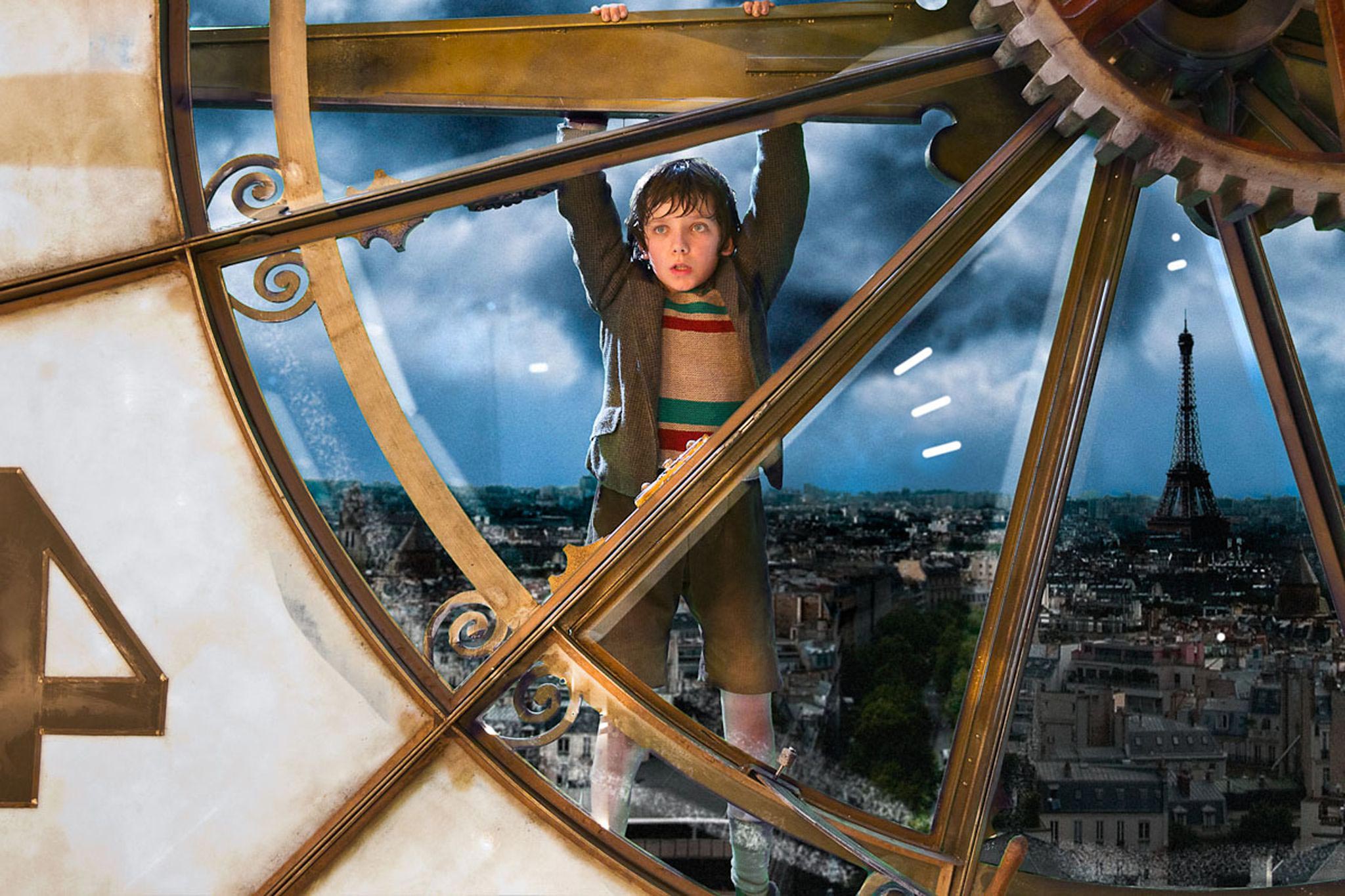
Hugo was a stunningly magical movie -- wonderfully played out in 3D (real 3D, not that 'enhanced' 2D we seem to be getting often). The moment the movie commenced, each particle of snowflakes drifting as in directly before my eyes, I was spellbound. Have never seen such impressive 3D effects. Not to mention it came with a true moral, and a real witty screenplay. The soundtrack was much fun, too -- don't know if Howard Shore can ever go wrong. First Lord of the Rings, and now this. Can't wait for The Hobbit!
Maybe that's why a broken machine always makes me a little sad, because it isn't able to do what it was meant to do... Maybe it's the same with people. If you lose your purpose... it's like you're broken.
I'd imagine the whole world was one big machine. Machines never come with any extra parts, you know. They always come with the exact amount they need. So I figured, if the entire world was one big machine, I couldn't be an extra part. I had to be here for some reason. And that means you have to be here for some reason too.
You've tried to forget the past for so long, but it has caused you nothing but unhappiness. Maybe it's time you tried to remember.

Friday, March 2, 2012

The Artist

Feeling uncomfortably hot -- even indoors, a damp humidity lingers. Perhaps it is because I just trimmed my cuticles, or have left my glasses elsewhere, but all is unpleasant to touch.
Anyway, that aside --

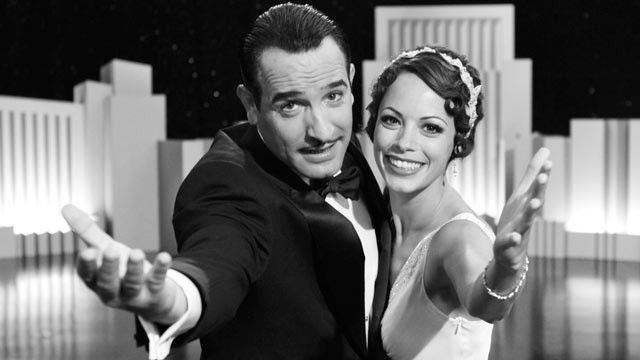
I must bashfully swallow my earlier predilection on The Artist. I just returned home from the cinema and it proved to be a rather enjoyable movie. The choreography was excellent, and the colour lighting for a black and white film was splendid. Excellent acting on Jean Dujardin and Bérénice Bejo's parts. Love the dog, as well -- he's probably my favourite character. Was also bounding about in the movie; he almost made me cry in one scene.
It certainly says something, though, to have a black and white film win Best Picture at the Academy Awards in the 21st century. I apologize if any take umbrage at such a statement, but it does ironically present the situation in the movie (won't delve into further detail here, as to not spoil anything). I suppose the movie really did sweep everyone off their feet. I've watched War Horse, and it's hard to say which deserves Best Picture -- War Horse was stunningly filmed, brilliantly coloured, and a wonderful story, yet there is something magically entertaining about The Artist. Being a huge John Williams fan, it hurts to say that I agree with Ludovic Bource taking home the Oscar for Best Soundtrack. It really was lovely, contributing to the film's wonder (as it played almost throughout the entire 2 hours). At one point, I even forgot it was a silent film and spoke aloud - that is bad film-watching...
Anyway, I'm glad I ventured to see it. It's a roasting afternoon, interrupting the cold whiplash of winter wind. The sun's high, yet I do miss a cool breeze.