Showing posts with label poetry. Show all posts

Tuesday, August 2, 2016

Life is jazz-shaped

Jazz PoemsJazz Poems by Kevin Young
My rating: 5 of 5 stars

After spending such a long time being obsessed with jazz music, I guess it was only a matter of time before I also started reading jazz poetry.

I keep telling my students (I'm currently teaching spoken word poetry to kids) that poetry = music = poetry. Jazz Poems, with its selection of poems written about the genre and for its musicians, confirms this idea through and through. Like a band, the collection is divided into numerous sections: Vamping (early jazz poems), Swinging (my favourite, obviously), Bop, Horn Section, etc. Each section has its own gems, but all demonstrate the undeniable link between poetry and music.

Some poems use onomatopoeia to convey the sound of jazz:
"go husha-husha-hush with the slipper sand-paper"
- "Jazz Fantasia," Carl Sandburg
"Plink plank plunk a plunk
Plink plank plunk a plunk
Plunk"
- "Jazz Band," Frank Marshall Davis
Other poems apply a subtler approach, creating rhythms from the form itself. In "Bringing Jazz" by Maxwell Bodenheim, an author's note at the top of the poem informs us that readers should speak the odd-numbered lines slowly and the even-numbered ones quickly. Here are the first four lines of the poem, to give you an idea:
"Last night I had an oboe dream
Whistlers in a box-car madness bringing jazz.
Their faces stormed in a hobo-gleam,
Blinding all the grinding wheels and singing jazz."
In "Jazz is My Religion" by Ted Joans, the irregularities in punctuation/spacing/letter case echo the improvisational nature of the dance itself, the range of dynamics, the changes in tempo, and so on.

But jazz poems are not exclusively about the music itself. In the introduction to the collection, Kevin Young writes that jazz, apart from inspiring experiment, has "just as often inspired elegy" in poetry. Indeed, numerous poems are written as tributes to jazz musicians. The whole last section of the collection, Muting, consists of poems written for Billie Holiday. One of the pieces I found mot memorable, Lawson Fusao Inada's "Listening Images," pairs composers' names with a couplet:
"COUNT BASIE

Acorns on the roof -
Syncopated oakestra

JOHN COLTRANE

Sunrise golden
At the throat"
The poems in this collection also reflect the historical roots of jazz and its musicians (indeed, Lindy Hop originated from the folk dance created by African slaves). Lewis Allan's "Strange Fruit," for instance, is a poem about racism that was later turned into a song and made famous by Billie Holiday.

And, like jazz, many poems in this collection are bold and unapologetic:

In the last few lines of AM/TRAK, an elegy written for John Coltrane, Amiri Baraka tells us to:
" Live!
& organize
yr shit
as rightly
burning!"
Baraka's performance of the poem, which you can watch here, also demonstrates the necessity and beauty of performing jazz poems.

As Jazz Poems delightfully and poignantly demonstrates, music is poetry. The rhythms, rhymes, and words that are inherent in both forms create a pulse that inspires dance and song.

So, "Go to it, O Jazzmen!"


View all my reviews

Tuesday, September 8, 2015

for life's not a paragraph / And death i think is no parenthesis

Selected Poems, 1923-1958Selected Poems, 1923-1958 by E.E. Cummings
My rating: 5 of 5 stars

Although I don't believe that one can ever truly 'finish' reading a poetry collection (this is truer said about poetry than prose), I have officially marked E.E. Cummings's Selected Poems, 1923-1958 as 'read' on my Goodreads account.

E.E. Cummings is well-known for his unconventional use of form  (see: "Grasshopper," which seems to 'leap' off the page), syntax and punctuation, and we see why from the first and sparsely punctuated poem of the collection: "in Just-spring". Just looking at a Cummings poem is an adventure in itself. Yet what I learned from his selected poems is that it is just as important to hear one being read aloud. You will have to pronounce every word in the bizarre "ygUDuh," notably, to access the depths of what is mere 'jibberish' on the surface. And you must read "may i feel said he" out loud because it reads so, so well. Just be careful who you read it around (trust Cummings to make one of the most erotic poems I've ever read sound like a nursery rhyme).

Working your way through a collection is the best way to become quickly acquainted with a poet's style, in both literary and thematic terms. Aside from his syntax eccentricities, for example, Cummings also plays with meter (tetrameter and trimeter alternate wonderfully in Ever-Ever land), shifting tense and the most brilliant juxtapositions. Here are some of the oxymorons/sharp contrasts that appear in his work: "big dark little day," "a gift called dying born," "Because / only the truest things always / are true because they can't be true."

Theme-wise, Cummings writes most commonly about love, death, time and life (as do most other poets, I suppose). Yet he very memorably personifies all these abstracts:
"death(having lost)put on his universe / and yawned: it looks like rain."
"Life is an old man carrying flowers on his head"
"Death is young / life wears velour trousers / life totters, life has a beard"
(the last two lines are taken from "suppose," one of my favourite poems by him.

And Cummings shows that there is almost nothing in the literary world that is lovelier than a poet in love:
"For love are in you am in i are in we"
"we're wonderful one times one"
"love is a deeper season / than reason"
The lines (composed of simple words that rhyme nicely) convey such a comfortable sense of simplicity and effortless togetherness.

It's always a joy to read Cummings because he uses (or even coins) the most delightful of words and phrases. "Scented merde," for instance, is quite unforgettable. So is his wordplay on the months of the year in "my father moved through dooms of love," as he writes about the "septembering arms of year" and an "octobering flame." Cummings doesn't draw from a terribly arcane lexicon; in fact, many of the words he chooses are monosyllabic. So whenever a special one (or ones) comes up, it's always warmly welcomed.

One can easily be overwhelmed by a sense of 'i-don't-get-this' when reading Cummings; sometimes, we don't even know how to piece a sentence, let alone a thought, together. But I love, love, love how he can place a single, perfect, quotable line into a seemingly inaccessible poem and utterly transform it. It is fitting that not a single poem has its own separate title; we remember them rather by the individual lines that define them:
"Tomorrow is our permanent address"
"I'd rather learn from one bird how to sing / than teach ten thousand stars how not to dance"
"lovers alone wear sunlight."
"and history immeasurably is / wealthier by a single sweet day's death:"
In this collection, Cummings serenades, seduces, satirizes, speculates and stuns. His poems are magic on the page, even though they don't take up too much space (especially with the lowercase). As Cummings writes in one of the poems in this collection, "there is a time for timelessness" - and timelessness is the quality to which his poems, experimental, wonderful and challenging as they are, should always be ascribed.

 (yes, I did intentionally try to use more parentheses in this review than I normally do).

View all my reviews

Sunday, August 9, 2015

The more things change the more they remain the same. History repeating itself, though in a more modest vein. Perhaps history has learned a lesson.

DisgraceDisgrace by J.M. Coetzee
My rating: 5 of 5 stars

*many many many spoilers ahead*

I've been on a blissful reading spree for the past four books, reading books that resonate with me in the best ways. In A River Runs Through It, On Writing, History of Love and History of the Rain, I found characters who eloquently voice how I feel about family/writing/reading/life in general. I connected with Norman MacLean, Stephen King, Alma Singer and Ruth Swain to higher-than-average extents.

Yet because the serious reader should not only stick to reading what makes her/him comfortable, I decided to read a novel that has been on my to-read list for ages and definitely tackles dark themes: J.M. Coetzee's Disgrace.

Our protagonist is the 52-year old and twice-divorced professor David Lurie, who goes through life teaching classes in which he has no interest (with the exception of his one course on romantic poets) and picking up scores of women who help him maintain a "moderated bliss." His one rule, "follow your temperament," is echoed in Byron's Lara, which David teaches to his class:

"... in some strange perversity of thought,
That sway’d him onward with a secret pride
To do what few or none would do beside;
And this same impulse would, in tempting time,
Mislead his spirit equally in crime;"

And thus it is by this "impulse he could not resist" that David begins a short-lived affair with one of his students, is later found out, brought to court, and eventually resigns, leaving civilization to visit his daughter, Lucy, in her farm in South-Africa.

By the way, the court case reminded me very much of Meursault's. Both demonstrate an absence of guilt and the eccentricity of the accused. As David says,
There is a difference between pleading guilty to a charge and admitting you were wrong. Repentance belongs to another world, to another universe of discourse.
And as someone who believes that
No animal will accept the justice of being punished for following its instincts,
David is even able to rationalize the unnecessariness of a issuing a formal apology. He makes the following remark about the women he meets:
“A woman's beauty does not belong to her alone. It is a part of the bounty she brings into the world. She has a duty to share it.”
So by this expert foreshadowing and in a striking turn of the plot, the tables are cruelly turned on David as his daughter - strong, independent, purposeful Lucy - becomes the victim of a double-rape. (I know that Wordsworth, one of the poets frequently alluded to in the novel, often wrote of a Lucy who was young, pure, but died an early death. After her rape, Lucy says that part of her has died, and David grieves for her as Wordsworth did for his Lucy. I can't help but notice the parallel).

Here is where the novel truly takes off, highlighting the grim depths of racial tensions, generation gaps and gender differences Coetzee explores. David has been "disgraced" by his scandal and now his daughter is disgraced by men she never laid eyes on. Men who, in a bitter stroke of irony, share David's views on the forgivability of an impulsive act and the commodification of women.

In the aftermath of the incident, the word "rape" is scarcely mentioned, but it need not be for readers to infer what Lucy suffered. Most troubling/shocking of all is her reaction to the incident, her initial apparent indifference and staunch refusal to raise criminal charges against anyone. Roles reverse as the steadfast Lucy seems maturer than David, who is absorbed by anger, saying, "'I want those men to be caught and brought before the law and punished. Am I wrong? Am I wrong to want justice?'" Again, how ironic is it that he, who was just trialled in court and pit against colleagues demanding an apology, is now begging his daughter (with similar fruitlessness) to accept his advice? How ironic is it that the professor of communications has lost the ability to connect with his own daughter, who does not even address him as 'dad,' but rather David?

The theme of generational gap is captured by David's inability to understand Lucy - her determination to stay on the farm, her love for women (as opposed to men), her decision to not report the rape. With the last point, however, Coetzee points out more troublingly the problems of South-Africa during the post-apartheid era, during which many homes of white farmers were trashed and robbed. Lucy's unwillingness to report the rape is tied to the fact of "this place being South Africa." Perhaps she feels that the rape is too "private" of a matter to be reported? That the rapists' act is in some twisted way rationalizable? That reporting will only bring her further trouble in a troubling society? Early on, David says that "there is a limit to sympathy," but his daughter's limit clearly extends much further than his does.

More on farm attacks, a problem which persists to today, can be found here: http://worldnews.nbcnews.com/_news/2012/11/30/15571149-killings-of-white-farmers-highlight-toxic-apartheid-legacy-in-south-africa

Disgrace haunts nearly all the main characters in the book - the seemingly incorruptible Bev Shaw (who turns out to be not so incorruptible after all), in some ways Petrus's wife (is her brother disgracing her?) and even the animals. At one point in the novel, David speaks of the death of the sick dogs at the animals welfare center as the "disgrace of dying." To be "like a dog," as we learn from David's conversation with Lucy, is "to start at ground level. With nothing. Not with nothing but. With nothing. No cards, no weapons, no property, no rights, no dignity." It is to be disgraced. And David is indeed "sunk in disgrace;" he becomes the "dog-man" who takes the corpses of dogs to the incinerator to be burned.

Yet in the final pages of the novel, he lets go. He gives up the dog to whom he was so attached. He even (in a bizarre way) manages to have dinner with the family of the student he seduced. Even though David insists at the beginning that "his temperament is fixed, set," and that he cannot change himself at this age, he proves himself wrong. Of course, this is the optimistic conclusion. One could equally say that the dog at the end of the novel is being released into the "disgrace of dying" (or being released from the disgrace of living). Yet with David's gentle treatment of the dog, his acceptance of Lucy's pregnancy (not as if he has a choice, anyway) and the somewhat-closure he achieves with his past, I'd like to think that he is less disgraced at the end of the novel than he was initially - that everyone is less disgraced.

Disgrace is best described as striking. It carries a brilliant and gripping plot, shocks us, and asks questions that have no definite answer but provoke important conversation. Should one be convicted for desire? Why does Lucy make the choices she does? Why do three assaulters get away so easily with rape, while David is brought before court in no time at all for seducing a student?
...We cannot live our daily lives in a realm of pure ideas, cocooned from sense-experience. The question is not, How can we keep the imagination pure, protected from the onslaughts of reality? The question has to be, Can we find a way for the two to coexist? 


View all my reviews

Sunday, July 19, 2015

Because I have been on a steady diet of words since the age of three

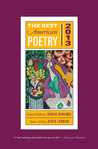
The Best American Poetry 2013The Best American Poetry 2013 by David Lehman
My rating: 2 of 5 stars

A short review this time -

A poetry anthology is like a great, big international conference: you have poems from various states, countries and cultures present, each sitting in their respectful pages, their presence contributing to the literary atmosphere of the room. Some poems are absolutely outstanding, the kind of people you want to talk to over and over again at such a gathering. Some are the guests you speak to once and then forget about soon afterwards. Others seem like they are putting on airs, trying too hard, communicating at you from a level that is both inaccessible and convoluted. Yet as it always is with meeting new people, it is always a matter of personality - I don't blame the poems any more than I blame myself.

From this collection, notables include "Foundling" by the ever-reliable Billy Collins, the very relatable "Why I Write Poetry" by Major Jackson, the stunningly powerful "The Kind of Man I Am at the DMV." Anthologies offer such a wide variety of different styles and voices that one reads not only for pleasure, but also for discovery and guidance.

View all my reviews

Saturday, March 1, 2014

The future tense, immense as outer space

Morning in the Burned HouseMorning in the Burned House by Margaret Atwood
My rating: 4 of 5 stars

Old age, love, loneliness, war, mourning - one could tuck such themes into the thick, wintertime blankets of Margaret Atwood's poetry collection, Morning in the Burned House. 

Of the five 'chapters' into which the collection is divided, the second is particularly powerful; in poems such as Helen of Troy Does Counter Dancing and Ava Gardner Reincarnated as a Magnolia, Atwood    presents prostitutes as goddesses - superior, desirable, assertive. "I'd rather be a flower [...] to be trampled," says the speaker in Ava Gardner, than the "sad destroyers" who ride into war. "Rats and cholera have won many wars," she says. There's a sort of feminist grit and anti-war sentiment that accompanies Atwood's poems in the first three chapters; She writes of sex, "messy love," (Asparagus) lust and battlefields. She does so boldly and transparently.

Yet it is the fourth chapter in the collection, containing 12 poems about the death of Atwood's father, that bears the most sorrow. At once, the 'grown woman' life portrayed in the second chapter is 50 pages behind. We trade Helen of Troy/Sekhmet/Ava Gardner for the flower girl, the younger 'I,' the daughter watching her father slide into the unrelenting arms of cancer.

"Time is another element you never think about until it's gone," (King Lear in Respite Care) laments the speaker as she sees that her father, attacked by the "industrious [cancer cell,]" (Cell) is beyond convalescence:
Gone are the days
when you could walk on water.
When you could walk.

The days are gone.
Only one day remains,
the one you're in.
The sadness from all the other poems in the collection seem to join hands in this particular chapter; the sadness from the the second poem of the collection (A Sad Child) migrates across chapters 2 and 3 to reach 4, and the last poem, from which the collection takes its name (Morning in the Burned House), also carries residue of the poems in chapter 4. It's 20 pages of grief and introspectiveness. In Down, she asks herself, and we ask too, "what are you supposed to do with all this loss?" The answer almost seems to emerge in Oh: "we decorate pain." We write about it, and Atwood has certainly turned it into poetry.

As she writes in The Fire Place,
Earth does such things
to itself: furrowing, cracking apart, bursting
into flame. It rips openings in itself, which it struggles
(or not) to skin over. The moon
doesn’t care about its own
craters and bruises. Only we can regret
the perishing of the burned place.
Only we could call it a wound.
Only we - humans - are victim to "snow's huge eraser" (Shapechangers in Winter), and the "old thread, old line of ink twisting out into the clearness we call space" (Down). 

Morning in the Burned House is a strong collection; there is grief, beauty and tenderness - all of which Atwood spells out unflinchingly.


View all my reviews

Wednesday, November 20, 2013

On Growing Old

Possibly my favourite poetry reading ever, followed closely by Sylvia Plath's Daddy and Robert Hayden's Those Winter Sundays.

Friday, November 1, 2013

Bruised bananas

Bruised bananas

At first, there were
10 hanging off
The same thick stem,
Ripe and yellowing.

Now, three sit
In the latticed basket,
Wearing their pockmarked skins,
Bruised and blackening.

Sunday, October 27, 2013

Sylvia Plath


On this day 81 years ago, Sylvia Plath was born in Boston; she would go on to become, as Joyce Carol Oates put it, "one of the most celebrated and controversial of postwar poets writing in English." It's a pity, therefore, that when people remember Plath they first think of her suicide and not her poems, which trap her anguish and imagination in strict-tempoed lines, unveiling them to each new reader.

Plath's poems have taught me to rhyme deftly and repeat with subtlety; among her poems, Daddy, Lady Lazarus, A Mad Girl's Love Song, A Life, April Aubade remain as some of my favourites. Her poems carry a feminine grace yet maintain the temperament of a woman who, as Ted Hughes declared, "saw her world in the flame of the ultimate substance and the ultimate depth."

May her poems be ever-treasured and read.

Monday, August 26, 2013

Carefully caught regrets


Next to familiarizing oneself with a poet's style, the best part about reading a poetry collection is culling favourites. 'The Lovesong of J. Alfred Prufrock' won me over immediately, as did the 4 Quartets (especially Dry Salvages). As seen in The Waste Land, T.S. Eliot certainly has a penchant for using 'death' imagery and writing about dry and barren things. He also explores the idea of the "shared agony" of life and death (I definitely prefer his commentaries to Jose Saramango's), and the passage of time. I will never forget how he refers to life as the "dreamcrossed twilight between birth and dying."

I have to resist the urge to copy/paste massive chunks of quotes in.
"It seems, as one becomes older,
That the past has another pattern, and ceases to be a mere sequence—
Or even development: the latter a partial fallacy
Encouraged by superficial notions of evolution,
Which becomes, in the popular mind, a means of disowning the past."
^my favourite passage from The Dry Salvages. What an astounding Quartet - in a matter of lines TS Eliot reflects upon time, the human perception of its passing and happinness.
The voice returns like the insistent out-of-tune
Of a broken violin on an August afternoon:
^I'm so accustomed to out of tune violins in August.
And youth is cruel, and has no remorse
And smiles at situations which it cannot see.
^ from The Portrait of a Lady, one of the most memorable poems from this collection.

Sunday, July 28, 2013

Pests... or pets?


I haven't posted in AGES, but here's what's been happening recently:

1) I watched How to Train your Dragon and it's now become my favourite animated movie ever (apart from the old Disney classics) - not only is the soundtrack (you go, John Powell) sweeping and breathtaking, the movie's message, albeit rehashed, is poignant and important. It takes but a friendship between a semi-tailed dragon (an incredibly mignon and Stitch-resembling dragon) and a viking-underdog to stress that we should never judge a book by its cover, but definitely embrace our own differences. Toothless and Hiccup are both outcasts, but are finally seen for who they truly are - HEROES!

2) I'm reading All The Names by José Saramago, a Nobel-Prize winning Portugese author. Saramago absolutely eschews quotation marks (or line breaks between dialogue for that matter), signifying new dialogue with only a comma and capital letter; this means I have to be painstakingly prudent when reading this book, but it's worth it! Besides from the fact that the main character is far from likable, Saramago spews out an intellectual sentence every few paragraphs, so I've got a whole bunch of quotes lined up on another post, which I'll release when I finish the book, along with a review.

3) I've fallen in love with The Love Song of J. Alfred Prufrock. by T.S. Eliot. I liked it before, but I'm now REALLY absorbed by it. Did a mini happy-jig upon realizing that it's included in this collection of poems I have at home. Tedious argument, insidious intent... the rhymes are astounding!

In the room the women come and go,
Talking of Michaelangelo.

Monday, August 20, 2012

Rage, rage


Do not go gentle into that good night
by Dylan Thomas

Tumblr_lyn5perk7h1r5nsf9o1_500_large
Do not go gentle into that good night,
Old age should burn and rage at close of day;
Rage, rage against the dying of the light.

Though wise men at their end know dark is right, 
Because their words had forked no lightning they
Do not go gentle into that good night.

Good men, the last wave by, crying how bright 
Their frail deeds might have danced in a green bay,
Rage, rage against the dying of the light.

Wild men who caught and sang the sun in flight,
And learn, too late, they grieved it on its way,
Do not go gentle into that good night.

Grave men, near death, who see with blinding sight 
Blind eyes could blaze like meteors and be gay,
Rage, rage against the dying of the light.

And you, my father, there on the sad height,
Curse, bless me now with your fierce tears, I pray.
Do not go gentle into that good night.
Rage, rage against the dying of the light.
Read this poem and was struck with an instant connection. Love it. I choose to read it with the interpretation that one mustn't give in gently to death, but instead rage against the 'dying of the light,' and fight for life.

Friday, June 15, 2012

Summer

In any case - School is out and the summer holidays are in!

Tumblr_m4v47guvn81qhdndmo1_500_large

Poem below is lovely. Better start working on my Personal Project!


Wednesday, June 13, 2012

In any case it is difficult to stand outside of one’s desires and see things of their own volition.

7285242302_5b6d409f43_z_large

The dead have no nationality


Tumblr_lwzvpuew7u1qj1b38o1_500_large


Fools beget their own kind.

Analysis of The Flea by John Donne.

Click here for the poem: http://www.luminarium.org/sevenlit/donne/flea.php

Dc9eae86e3f99a93c423aa3776ceedac_large

The Flea is a good poem to dig under, mainly because of the witty sexual innuendoes tucked in each stanza. It is without a doubt the cleverest – but also oddest – pick up line I’ve stumbled across!
A little background is useful before undressing this poem. The author, John Donne, was at this time experiencing frustration because he had juts married the love of his life, Anne More, although it was deeply against her parent’s wishes and since they were powerful people, they got Donne thrown into prison. This poem was probably written before the pair got married – the reason of which will soon become evident.
What makes the poem memorable, and what must be grasped is the object the flea represents – the consummation of Donne and Anne. In the old times, people believed that during intercourse blood would mingle, and Donne has taken the fact that the flea has sucked blood from both himself and his lover to his advantage in arguing that the flea now possesses a mingling of their blood, and “pampered swells” from the richness of it. Yet, he laments that that was “more than we would do,” which is the point in the poem when we realize the lover refuses to lose her virginity, afraid the marriage with Donne would shame her, and the poem is therefore a disguised wooing attempt.
Bearing in mind that the flea now possesses three blood types – Donne’s, his lover’s and its own – there are now “three lives” in one flea and Donne uses this to further argue that the lover must not attempt to swat the flea (which she would probably do under the circumstances, assuming that the wooing may be getting creepily out of hand and too figurative), as the flea is their “marriage temple,” holding their holy unity within “living walls of jet,” which refers to the flea’s skin. The speaker argues that by swatting the flea, the lover not only commits “self-murder,” but also sins thrice because there are, after all, “three lives” within that flea.
So, after all the speaker’s efforts to protect this flea, the climax of the poem arrives as the lover – probably disturbed beyond compare at this points – swats it anyway and smears her “nail in blood of innocence,” the innocent object being of course the flea. Here is when the speaker has no choice but to lament and complain – he questions where the flea was “guilty” and wonders at her “cruel and sudden action.” However, what truly turns this poem comedic is the final three lines, where the speaker gives one more clever shot at trying to get this girl, despite everything that has gone wrong. “Just so much honor when thou yield’st to me,” he says, “Will waste, as this flea’s death took life from thee.” He refers to the girl’s “false fears”, which is her fear of losing her virginity due to her parent’s “grudge.” Donne says she has really no reason to be afraid of wasting any extra honor because the amount of honor she has already lost sinning, by killing the flea that consummated their love, can’t be more than the amount of honour she’d potentially lose if the two make love. Everything will ‘cancel out’ and yielding to him won’t make a difference regarding her honour, and Donne doesn’t mind about his own either. Moreover, she “find’st not thyself, nor [. . . the speaker] the weaker now” so it is not as if her ego would suffer a blow either. So, even though Donne began this rebuttal with “’Tis true,” he still manages to whip things around and eventually essentially say, “Why not do it anyway” to his lover.
It is funny to think that John Donne – who later become a priest – ever came up with such a metaphor!

Words pale and lose their savor while pain is always new.


My analysis of a poem we studied at school:

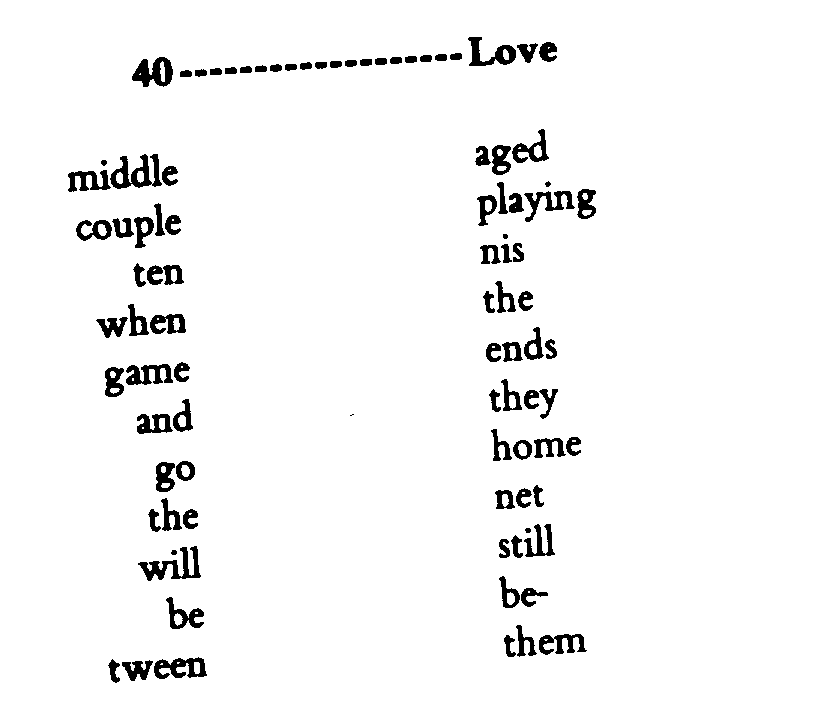
40-Love by Robert McGough 


Tumblr_lz08mcrpx21qldt8eo1_500_large


Here is another poem about love – but a rather tricky relationship. The first thing that must be noted upon viewing this poem is definitely its structure, something many modern poets like to play with (most notably, E.E. Cummings). The first two words of the poem announce that the couple is middle aged, like the title suggests (the “40” in 40-love refers to age). In another context, 40-Love is also a term in tennis that is called when a player is one point away from victory whereas the other opponent’s score remains as zilch. So, cleverly, the structure is divided so that when the poem is read, our eyes leap back and forth across the center like a ball hit across a net over and over again. With this in mind, the poem becomes a tennis match between a couple, and the blank space in the middle is their net. The shortness of the poem is a simplicity asset, taking us to the poem’s message quicker (like a quick tennis game). “The net will still be between them” is our best lead pertaining to their relationship. They may not be so happily in love after all. The net is more than just an object in their game, but a metaphor for a division in their daily lives – a barrier that blocks communication. I also liked how the two “be’s” were opposite each other in the structure of the poem. It is almost as if the poet was drawing a connection between the two behind the net, hinting that although they are inevitably linked and similar, they are separate. Robert McGough is actually known for being a performance poet, as he often likes to perform his poems. In fact, when I listened to Robert McGough reading 40-Love, the recital was recorded with sounds of birds chirping, and each word of the poem accompanied by a ping of the tennis ball. This is what makes the poem most special – it is written not only for reading, but also experiencing. The poem is designed to trigger you imagination, and that is why I like it.

Tuesday, May 15, 2012

But not this one


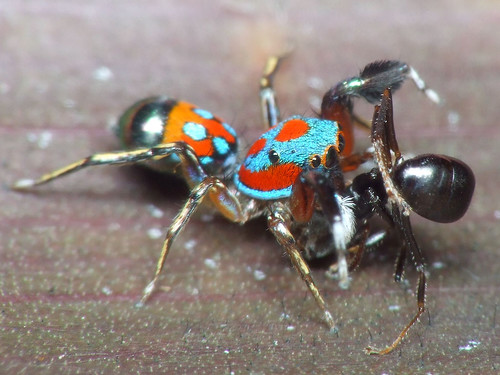
Somewhere in the Amazon rain forest I suppose
there is a magnificent spider - shelled like iron
fused with sun-hot magnesium - and embellished
with a soft fur of cyan blue, sunset red and fiery
orange. Such a beast exists and its eight razor limbs
jail a helpless prey twisted into this path by
some anonymous fate as black and blind as itself.
An attempt for fleeing is only a second-long illusion
before the forefront pincers have stabbed the
senseless ant silent. Yes, somewhere a spider has
executed this feat.

But not the one that scrabbled on my window sill
- eight flailing sticks like a broken ballerina, only
a crumb - iota - grain - modicum of withered dust.
Squashed by the howling night wind by the speed
of a car. It spun like a tumbleweed and adhered itself
to the man-made shine of a car door.


Somewhere in the Amazon rain forest I suppose
there is a magnificent spider - but not this one.

Thursday, May 3, 2012

May

Wanted to post this so, so badly last year but forgot about it completely.
May, my month! Will soak it up and write down dates as much as possible.
So, here is the phenomenal, alliteration-master: Joyce. Read it aloud, that
is when it is at its prime. It's a sweet poem, unlike the lyrical but angry poetry
(well it's prose but I like to think of it has poetry) of A Portrait of the Artist as 
a Young Man.
Winds of May

Winds of May, that dance on the sea,
Dancing a ring-around in glee
From furrow to furrow, while overhead
The foam flies up to be garlanded,
In silvery arches spanning the air,
Saw you my true love anywhere?
Welladay! Welladay!
For the winds of May!
Love is unhappy when love is away!

James Joyce
And, for more May celebration:

Thursday, March 1, 2012

March

Why not celebrate the arrival of March with Wordsworth? Always so joyous about nature, he is.


The cock is crowing,
The stream is flowing,
The small birds twitter,
The lake doth glitter,
The green field sleeps in the sun;
The oldest and youngest
Are at work with the strongest;
The cattle are grazing,
Their heads never raising;
There are forty feeding like one!

Like an army defeated
The snow hath retreated,
And now doth fare ill
On the top of the bare hill;
The Plowboy is whooping-anon-anon:
There's joy in the mountains;
There's life in the fountains;
Small clouds are sailing,
The rain is over and gone!

by William Wordsworth


Saturday, February 18, 2012

Blue winter

Blue winter's flame

Above the stove,
we lit a tender fire.
Swiftly, the pointed flames
shoot and shimmer.

Blue as winter's drear
outside the window,
There lies yonder
a cold, darkening world.

Yet I stay sheltered 
by the smoke of tonight's soup:
red carrots and other soft vegetables,
heated by ringlets of 
dancing ballerina blue fire
on the metal cook-top stage.

They feed our winter's warmth.