The Brief Wondrous Life of Oscar Wao
 by
Junot Díaz
My rating:
5 of 5 stars
When life gives you lemons, read anything written by Junot Díaz. I
thought
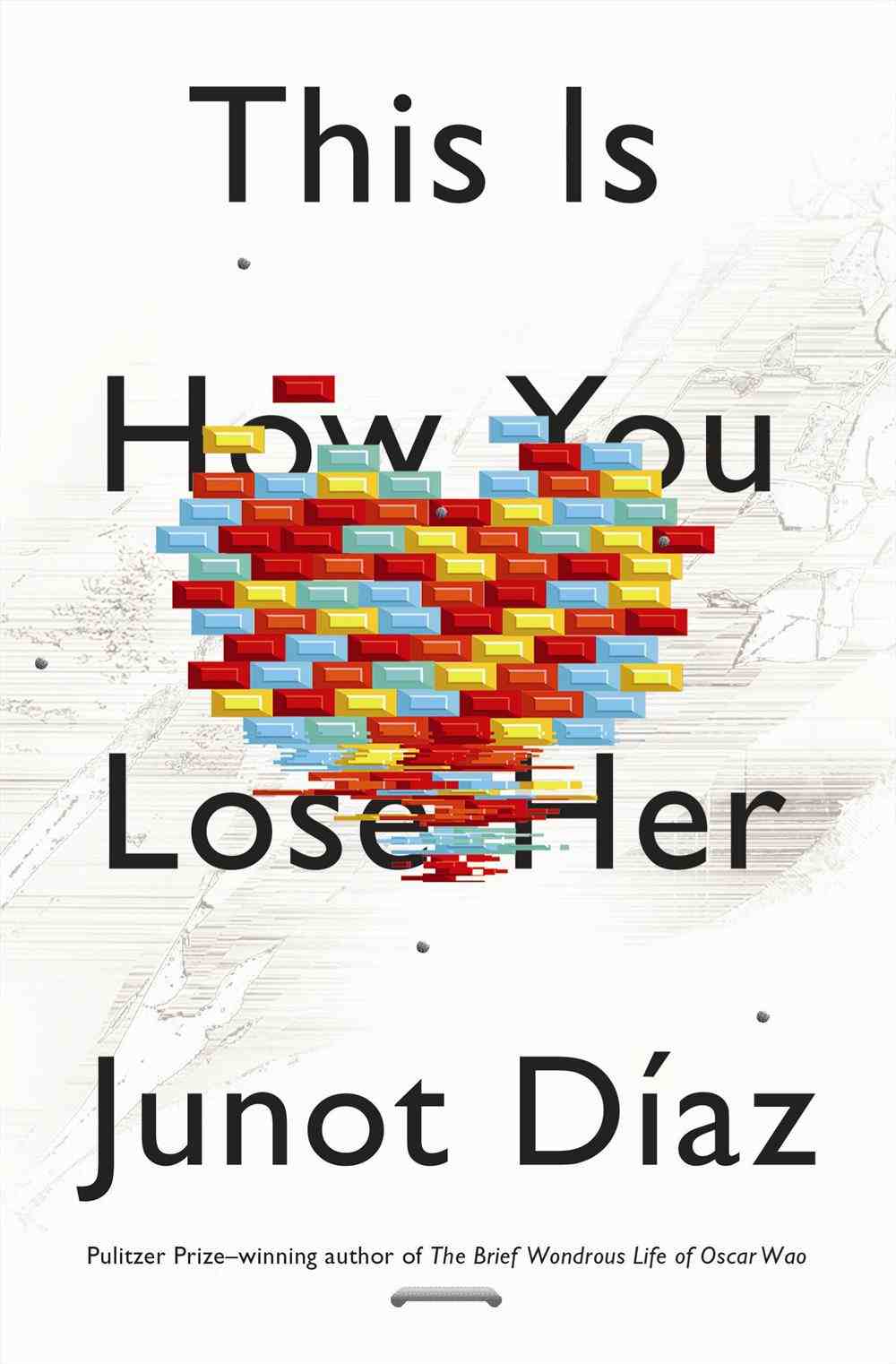
This is How you Lose Her was good, but
The
Brief Wondrous Life of Oscar Wao hits it out of the ballpark with infectious
wit and 335 pages worth of what Michiko Kakutani from
The New York Times aptly called, “adrenaline-powered prose.”
In The Brief Wondrous Life of Oscar Wao, Díaz traces the family history and life
story of Oscar de Léon, an overweight "ghetto nerd at the end of the
world" who is fluent in Elvish, spews out words like "copacetic"
in everyday conversation and is obsessed with, but sadly hopeless at wooing,
women. Oscar is later nicknamed "Wao" because of his apparent
resemblance to Oscar Wilde. I'll never know how Yunior, Oscar's roommate/best
friend and the boyfriend of his sister (Lola) ever drew that
comparison. While the novel is mostly set in modern-day New Jersey, its
characters' stories often take us back to the time of Rafael Trujillo: the
ruthless dictator who ruled the Dominican Republic from 1930 to 1961.
Before we even meet Oscar, our narrator announces that his whole
family is victim to fúku - "a curse or a doom of some
kind" - that was cast on Oscar's grandfather, Abelard, after he upset the
Trujillo. We are offered compelling evidence, such as the cruel deaths of Abelard’s
wife and his daughters, that suggests fúku has indeed plagued the de Léon family
for centuries and continues to work its voodoo on poor Oscar.
The main reason why Oscar is so unpopular with the ladies is that
he defies the traditional qualities of masculinity. As our narrator informs us,
“he wasn't no home-run hitter or a fly bachatero, not a playboy with a million
hots on his jock.” Unlike Yunior, whose muscle mass and success with women make
him an alpha male of sorts, Oscar is an absolute nerd whose “commitment to the
Genres had become absolute” by high school. Such nerdery is exemplified by the
countless allusions to nerdfare throughout the novel: Yunior and Oscar’s
exchange of “Mellon” (I was over the moon when I read this), the fact that the
Gangster "wasn’t no ringwraith but wasn't
no orc, either," the X-wings and TIE-fighters hanging from Oscar’s
ceiling… Oscar and Yunior would have nothing to do with each other if it
weren’t for Lola and their mutual, Santo Dominican-love for women.
Yet it is fitting that Oscar is obsessed with the fantastical, for
he himself is often submerged in his own fantasies. For example, he believes
that “La Jablesse” is “the one” although, ironically enough, La Jablesse (which means “Devil Woman”
in French) is infamous in Caribbean folklore for seducing men and luring them
astray. Similarly, Oscar wholeheartedly believes that Ybón will leave the
police for him, although his relentless attempts to win her over eventually
lead to his death. Fúku at work?
The very existence of fúku reflects the deep-rooted historical
context and tradition in the novel. On the one hand, Díaz reveals the
Trujillo’s tyranny through the extensive footnotes that recur every few pages.
(The size 8 pt font was unbearable at first, but grew on me.) More effectively,
Díaz sheds light on the dictator’s omnipresence through the characters’ stories.
For example, there is a comic juxtaposition between the casual and fatal in
Beli and the Gangster’s affair: she is naïve and infatuated while he is part of
the Trujillo’s ruthless and dictatorial family circle.
Furthermore, a strong sense of cultural identity penetrates the
novel. There is frequent mention of diaspora and the idea of running away from
home; Lola, of course, tries to do this many times. Yet the motherland will
always call you back. The pungent and familiar smell of home hits Oscar hard
when he returns to the DR to find:
"... the surreal whirligig that was life in La Capital
- the guaguas, the cops, the mind-boggling poverty, the Dunkin' Donuts, the
beggars, the Haitians selling roasted peanuts at the intersections, the
mind-boggling poverty, the asshole tourists hogging up all the beaches, [...]
the mind-boggling poverty, the snarl of streets and rusting zinc shacks that
were the barrios populares, the masses of niggers he waded through every day
who ran him over if he stood still, the skinny watchmen standing in front of
stores with their brokedown shotguns, the music, [...] the mind-boggling
poverty ..."
That’s the most fabulous run-on sentence I’ve read in a while.
Of course, Díaz’s style contributes most to the indelible
mark of culture in the novel. Our narrator is well versed in Dominican lingo,
hitting us with “homeboys” from the very beginning. Thanks to Junot Díaz, I’ve
learned my fair share of Spanish swear words. On a more serious note, however,
such coarse language also mirrors the undercurrent of violence in the novel.
The brutality that increasingly emerges towards the end can be so
shocking that you almost don’t believe it. We move from reading about LoTR in
one page to Oscar’s beatings in another. Yet Díaz has a way of effortlessly planting
dark humour in the midst of the horrific: “We’ll let you go if you tell us what
fuego means in English. Fire, he blurted out, unable to help himself.” The
storytelling way in which the novel unravels itself and the everyday naturalness
of the surreal events that occur (e.g. the appearance of the mongoose) reminded
me of the magic realism in Gabriel García Márquez’s The 100 Years of Solitude. What you read seems impossible, but – on
mere pages – becomes utterly believable.
Although the narrator of the novel is almost invisible, a seamless
and flawless transition reveals Yunior to be our the storyteller. Perhaps this
is why the title is not The Brief
Wondrous Life of Oscar de Léon, but rather The Brief Wondrous Life of Oscar Wao – after all, Yunior came up
with that nickname.
Just as when I read This is How You Lose Her, I'm
struck by how effortlessly I support the protagonists. I mean, if I met anyone as
stalker-ish and gaming-obsessed as Oscar in real life, I'd most likely make a
run for it. Yet I wait impatiently for him to reappear in the novel as I read
on, my fingers crossed that he will lose his virginity before his brief,
wondrous life is over. I suppose this is the power of literature: it connects
readers and characters, relays the impossible and elicits sympathy for the
hopeless. Although Hong Kong and Santo Domingo are 22+ hours apart by plane, I
was actually able to see a sliver of myself in Oscar:
“He read The Lord of the Rings for what I’m estimating the
millionth time, one of his greatest loves and comforts since he’d first
discovered it, back when he was nine and lost and lonely and his favourite
librarian had said, Here try this, and with one suggestion changed his life.
Got through almost the whole trilogy, but then the line “and out of Far Harad
black men like half-trolls” and he had to stop, his head and his heart hurting
too much.”
There is much respect for the
written word in The Brief Wondrous Life
of Oscar Wao. Early on, Yunior tells us that writing the book is his zafa, the counterspell to fúku. Indeed, when Oscar writers 15
pages in one sitting, is he not also writing to save himself? Yet regardless of
whether or not fúku truly exists, “that’s life for you. All the happiness you gather to yourself, it will sweep away like it’s nothing. If you ask me I don’t think there are any such things as curses. I think there is only life. That’s enough.”
So, The Brief Wondrous Life of Oscar Wao is an extraordinarily funny
and moving tribute to nerds, the culture of the DR and – of course – “the
beauty!” of life.
View all my reviews

 Drown by Junot Díaz