Saturday, March 1, 2014

The future tense, immense as outer space

Morning in the Burned HouseMorning in the Burned House by Margaret Atwood
My rating: 4 of 5 stars

Old age, love, loneliness, war, mourning - one could tuck such themes into the thick, wintertime blankets of Margaret Atwood's poetry collection, Morning in the Burned House. 

Of the five 'chapters' into which the collection is divided, the second is particularly powerful; in poems such as Helen of Troy Does Counter Dancing and Ava Gardner Reincarnated as a Magnolia, Atwood    presents prostitutes as goddesses - superior, desirable, assertive. "I'd rather be a flower [...] to be trampled," says the speaker in Ava Gardner, than the "sad destroyers" who ride into war. "Rats and cholera have won many wars," she says. There's a sort of feminist grit and anti-war sentiment that accompanies Atwood's poems in the first three chapters; She writes of sex, "messy love," (Asparagus) lust and battlefields. She does so boldly and transparently.

Yet it is the fourth chapter in the collection, containing 12 poems about the death of Atwood's father, that bears the most sorrow. At once, the 'grown woman' life portrayed in the second chapter is 50 pages behind. We trade Helen of Troy/Sekhmet/Ava Gardner for the flower girl, the younger 'I,' the daughter watching her father slide into the unrelenting arms of cancer.

"Time is another element you never think about until it's gone," (King Lear in Respite Care) laments the speaker as she sees that her father, attacked by the "industrious [cancer cell,]" (Cell) is beyond convalescence:
Gone are the days
when you could walk on water.
When you could walk.

The days are gone.
Only one day remains,
the one you're in.
The sadness from all the other poems in the collection seem to join hands in this particular chapter; the sadness from the the second poem of the collection (A Sad Child) migrates across chapters 2 and 3 to reach 4, and the last poem, from which the collection takes its name (Morning in the Burned House), also carries residue of the poems in chapter 4. It's 20 pages of grief and introspectiveness. In Down, she asks herself, and we ask too, "what are you supposed to do with all this loss?" The answer almost seems to emerge in Oh: "we decorate pain." We write about it, and Atwood has certainly turned it into poetry.

As she writes in The Fire Place,
Earth does such things
to itself: furrowing, cracking apart, bursting
into flame. It rips openings in itself, which it struggles
(or not) to skin over. The moon
doesn’t care about its own
craters and bruises. Only we can regret
the perishing of the burned place.
Only we could call it a wound.
Only we - humans - are victim to "snow's huge eraser" (Shapechangers in Winter), and the "old thread, old line of ink twisting out into the clearness we call space" (Down). 

Morning in the Burned House is a strong collection; there is grief, beauty and tenderness - all of which Atwood spells out unflinchingly.


View all my reviews

Thursday, February 27, 2014

Open door

A bit too in love with this song:

Monday, February 24, 2014

Signal

World Press Photo of the Year 2013 by John Stanmeyer

I saw this photograph this morning and it has remained imprinted in my mind ever since.
Taken by John Stanmeyer, the stunning photograph above, titled Signal, is the winner of the World Press Photo award -  one of the most prestigious awards that a photographer can hope to claim.

Striking in its simplistic composition and color scheme, Signal unfolds a remarkable story. "So.. they're instragamming the moon?" was the suggestion put forth by one of my friends when I showed her this photo. A good guess, but no -  - this year's World Press Photo Award winner is not an example of the 21st century Instagram phenomenon, but rather a capture of a rawer and more intimate moment.

As is written in this photo's caption, the men in the photo are African migrants standing on the shore of Djibouti city, trying to "capture an inexpensive signal" from Somalia so that they can call home.

Family, hardship, journey, determination - at once, a slew of words emerges to accompany the photo and make its setting all the more befitting.

As Chinese poet 李白 wrote in his renowned poem 靜夜思, “舉頭望明月,低頭思故鄉:”  "Raise your head to look at the moon, lower it and think of home." In Chinese literature, the moon has always born a symbolic significance:it has always meant home and nostalgia - you're looking at the moon here, and the rest of your family is miles away looking at the same moon. Therefore, the gleam from the migrants' mobile phones - mirroring the light of the moon - almost seems to carry the connotation of the 'modern moon' - it is the "tenebrous link" to home.

Also stated in the photo's caption is a side-note on Djibouti city on how it is "a common stop-off point for migrants in transit from such countries as Somalia, Ethiopia and Eritrea, seeking a better life in Europe and the Middle East." Seeking a better life. These men are magnified, their voyage glorified, their purpose ennobled: something in the shadowed stance of these migrants becomes heroic, almost holy. It is as if they are raising their cell phones in prayer. It is an image that is as tender as it is brave.

Signal captures a perfect and moving enroute-moment. It captures the step between the departure and destination during which a hopeful traveller wants nothing more than to reach home, to call upon the comforts of family and the familiar before he once again returns to the voyage of "seeking a better life."

"A picture is worth a thousand words."

It's a trite platitude, perhaps, yet one that aptly captures the essence of Signal nonetheless.

Sunday, February 16, 2014

Avocado in a mug


I spent several hours this weekend running away from my responsibilities and trying to
'procrastinate productively' (e.g. changing my FB settings so that my language settings are
in French...  counts as practicing French?).

Anyhow, it's been months maybe since I've written a 'normal' blog post - as in just a regular
entry sans book/film review, something a bit more angled towards the personal-life spectrum.

I've recently gotten into mug cakes. I love the simplicity and efficacy of mixing a bunch of
ingredients in a mug, popping it in the microwave and devouring the end product -- all within 15 minutes. Now my recommended recipes on Yummly (food has never appealed to me more) all
seem to be generally around the you-only-need-5-ingredients range, which 1) is delightful
2) hopefully doesn't make me seem like a lazy person...

...anyhow, I decided to take mug cake making up a notch this past week by trying one of Kirbie's Cravings' recipes: avocado cake in a mug. I love squishy foods (is there a more eloquent way
of putting this?) - yams, avocados, bananas, pumpkins, squash, ETC. So I'm literally going to
try and make a yam cake in a mug some time in the future.

Anyhow, unfortunately, my kitchen experience didn't really turn out to be one of those
"I've adapted a recipe and it worked brilliantly despite my alterations"
cases. So I haven't got a picture of a 'proper' mug cake because the end product ... went wrong in some way (not entirely though). I had great fun eating it, but at the same time I'm not sure if what I ended up with was really the 'legit thing.'

I might try using self-rising flour next time.

OK, I now need to get back to 'productivity'...

P.S. I am (or was) reading Zadie Smith's NW, but I've paused it to reread the Border Trilogy. Yay!

Sunday, February 9, 2014

Things can change in a day

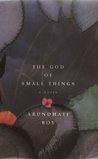
The God of Small ThingsThe God of Small Things by Arundhati Roy
My rating: 5 of 5 stars

"You must read this," I was told time and time again by two of my good friends (whose opinions I value). So I did, and I am grateful.

Arundhati Roy's The God of Small Things is powerfully compelling, at once revolving around the hard boundaries of the caste system but also throbbing with a childhood tenderness and delicacy.

It opens in the long, humid and rainy days of May in Ayemenem where we are at once thrown into a chapter (beautifully alliterated: Paradise Pickles and Preservers) brimming with description, with puddles and dampness and soft moss and a "wild, overgrown garden full of the whisper and scurry of small lives."
And such a notion of smallness - of small things changing a lifetime and of small gestures making small imprints on something as vast as love - recurs throughout the novel. 

On the back of my copy, John Updike is quoted for having said that "to discuss the plot [of this novel] would be to violate it." And I agree - but just to give you some context...

Rahel and Esthappen are two twins (Rahel - girl, esthappen - boy) who - at the curiosity-driven, innocuous years of childhood - find themselves tied down by an immense history of caste systems and political/social boundaries that weave themselves into their lives. These restraints impact not only them but also their mother, Ammu, and the 'Untouchable' Velutha, the carpenter who works at Paradise Pickles and Preserves.

The twins are fond of Velutha, who is in turn fond of them, and soon Ammu herself develops feelings for Velutha - dangerous feelings forbiden by the Love Laws, "the laws that lay down who should be loved, and how. And how much."

These laws lie at the heart of this novel and because of them the characters find themselves:
"... prisoners of war," Chacko said. "Our dreams have been doctored. We belong nowhere. We sail unanchored on troubled seas. We may never be allowed ashore. Our sorrows will never be sad enough. Our joys never happy enough. Our dreams never big enough. Our lives never important enough. To matter."

Even after finishing this novel I'm not sure if I can put a name to 'The God' of Small Things; I don't even think that is a question the novel asks. Rather what it stressed are the small things and the effects they have on history as a whole, on how Rahel and Estha's lives pan out, on how "things can change in a day" because of small things. Most importantly, about how "history negotiates its terms and collects its dues from those who breaks its laws."

What is most heartbreakin most about Roy's characterization of the twins is how they think of each other as "me," and how "emptiness in one twin was only a version of the quietness in the other"... how Estha grew "accustomed to the uneasy octopus that lived inside him and squirted its inky tranquilizer on his past. "

If you're planning to read the novel, the family tree below shall prove immensely helpful, too bad I only found out about it 5 minutes ago:


Lengthy and even arguably verbose, The God of Small Things does not unfold chronologically and thus its plot is not so easily grasped; however, Roy reiterates key sentences throughout the novel:
The God of loss.
The God of Small Things.

Love. Madness. Hope. Infinite joy.


- which, like color-coded lighthouses on a broad sea, point readers in the right direction. Technically, a large chunk of the whole novel is exposed in the first chapter but at that point one lacks too many of the precious details (Roy does details so well) to register much.

Roy's prose is poetic; she doesn't merely write - she paints, embellishes and illustrates using the most ordinary or exquisite of words. Such elegance, made visual by Roy's crafting, remains constant throughout the novel regardless of what she is describing, be it a beaten man or a yellow church.

Thus thought-provoking as the themes expressed in this novel are, it is ultimately the language - the intrinsic detail, the exquisite metaphors - that carry the plot and tie together all its magic and mystery.
Human beings were creatures of habit, and it was amazing the kind of things they could get used to.

It seemed so absurd. So futile. Like polishing firewood

It is curious how sometimes the memory of death lives on for so much longer than the memory of the life that it purloined..

And we, my dears, everything we are and ever will be are just a twinkle in her eye," Chacko said grandly, lying on his bed, staring at the ceiling.

Then Small God (cozy and contained, private and limited) came away cauterized, laughing numbly at his own temerity. Inured by the confirmation of his own inconsequence, he became resilient and truly indifferent. Nothing mattered much. Nothing much mattered. And the less it mattered, the less it mattered. It was never important enough. Because Worse Things had happened. In the country that she came from, poised forever between the terror of war and the horror of peace, Worse Things kept happening.

So Small God laughed a hollow laugh, and skipped away cheerfully. Like a rich boy in shorts. He whistled, kicked stones. The source of his brittle elation was the relative smallness of his misfortune. He climbed into people’s eyes and became an exasperating expression.”


View all my reviews