Thursday, August 8, 2013

Whether they are part of a home or home is a part of them is not a question children are prepared to answer.

I put a colossal amount of effort into hunting down this book and it was worth the effort.

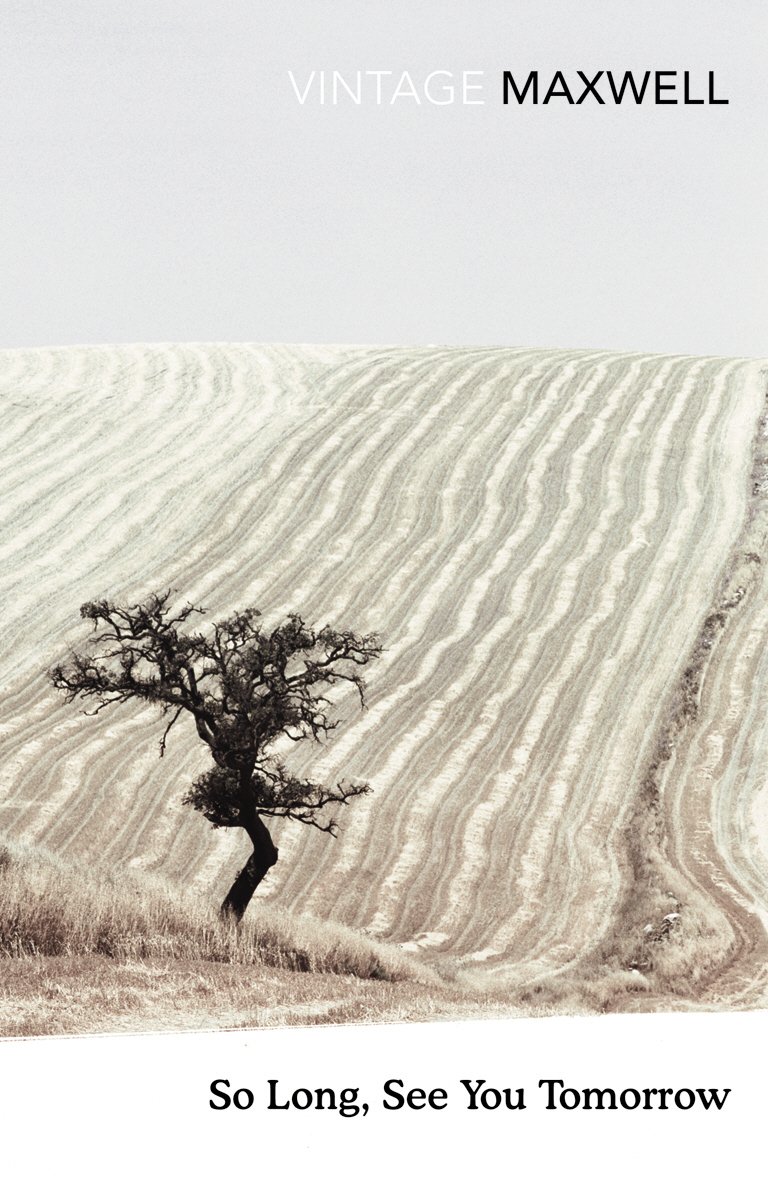
First published in The New Yorker, So Long, See You Tomorrow by Williams Maxwell is a 70% pulled together and 30% "hazy half-recollection".

Lloyd Wilson, a tenant farmer, is found dead with one of his ears missing (why the ear, we never find out); Clarence Smith, his friend and husband of his mistress, is the definite culprit. Cletus Smith, son of Clarence, takes to wandering somberly in the hallways of the MoMA, stumbles upon a painting - the Palace at 4am - and meets then befriends our narrator. Although both come from different social classes, they are equated by their age and circumstance. Cletus is trembling under his mother's treachery, his father's retreat and the inevitable fragmentation of his family; our narrator is dealing with the death of his mother, his father's remarriage and a new town. Both face the impossibility that comes with the passage of time of ever "getting around to the way things were."

Not long after, Cletus' father suicides, forcing Cletus "over the line into maturity." When the two young boys meet again, our narrator, perhaps due to his never-pitied "physical inadequacy, fear [and] humiliation," fails to reach out to Cletus and allows Cletus - his momentary companion - to slide out of his life.

Yet the past is a metaphysical friend (or foe) to whom we can say "so long, see you tomorrow." This is exactly what our narrator does, for the memory of his ignorance is to him a betrayal as deep as Lloyd Wilson's affair was to Clarence, and follows him his whole life.

Upon his attempt to reconstruct the past, Cletus' first step is to "invent a dog," and this dog trots throughout the recollected past, as Clarence's pet, an observant companion that runs parallel to the boys' lost childhood. In fact, when our narrator cedes his recollection, and when Cletus's childhood is decidedly terminated, the dog is the first to go, put to sleep by chloroform, vanishing into the obscure past like a tarnished memory.

Tenderly recounted in the perspective of an old man yet recollected in the voice of the innocuous child he once was, So Long, See You Tomorrow reveals the vilifying power of betrayal, heartbreaking naivety of a child, and most of all, how a neglected gesture can turn into a lifetime's regret.


“Innocence is defined in dictionaries as freedom from guilt or sin, especially from lack of knowledge; purity of heart; blamelessness; guilelessness; simplicity, etc.”
“What we, or at any rate what I, refer to confidently as memory--meaning a moment, a scene, a fact that has been subjected to a fixative and thereby rescued from oblivion--is really a form of storytelling that goes on continually in the mind and often changes with the telling. Too many conflicting emotional interests are involved for life ever to be wholly acceptable, and possibly it is the work of the storyteller to rearrange things so that they conform to this end. In any case, in talking about the past we lie with every breath we draw.”
“Who knows what oversensitive is, considering all there is to be sensitive to.”
Best chunk from the novel:
“Whether they are part of a home or home is a part of them is not a question children are prepared to answer. Having taken away the dog, take away the kitchen–the smell of something good in the oven for dinner. Also the smell of washing day, of wool drying in the wooden rack. Of ashes. Of soup simmering on the stove. Take away the patient old horse waiting by the pasture fence. Take away the chores that kept him busy from the time he got home from school until they sat down to supper. Take away the early-morning mist, the sound of crows quarreling in the treetops. His work clothes are still hanging on a nail beside the door of his room, but nobody puts them on or takes them off. Nobody sleeps in his bed. Or reads the broken-back copy of Tom Swift and His Flying Machine. Take that away too, while you are at it. Take away the pitcher and bowl, both of them dry and dusty. Take away the cow barn where the cats, sitting all in a row, wait with their mouths wide open for somebody to squirt milk down their throats. Take away the horse barn too–the smell of hay and dust and horse piss and old sweat-stained leather, and the rain beating down on the plowed field beyond the door. Take all this away and what have you done to him? In the face of a deprivation so great, what is the use of asking him to go on being the boy he was. He might as well start life over again as some other boy instead.”
Atticus-esque:
“A gentleman doesn't have one set of manners for the house of a poor man and another for the house of someone with an income incomparable to his own.”
“Love, even of the most ardent and soul-destroying kind, is never caught by the lens of the camera.”

Wednesday, August 7, 2013

The half-life of love is forever

After dragging myself through All the Names and July's People, I decided to read something more contemporary with a fair bit of cussing (joking about the latter). I first spotted This Is How You Lose Her in an airport bookstore, read the line "the half life of love is forever" in the blurb (mind you, I was studying radioactive decay then) and have hungered to read it since.

It took me a while to realize that I was reading a collection of short stories, not a novel - Diaz's narrative tone is so autobiographical throughout and his characters recurrent that the stories, like Hemingway's Nick Adams stories, string together effortlessly.

This Is How You Lose Her revolves around, Yunior, a reckless yet innately sensitive womanizer who goes around breaking hearts but always eventually gets his fair share of karma and learns that he's become prone to "losing 'her,'" whoever 'she' may be - his high school teacher, his fiancee, or maybe even just some 'sucia' he met at a club.

From being subconsciously aware of his father's dishonesty (I may be wrong but it was heavily insinuated) to watching his brother recycle helplessly stricken girls, Yunior finally becomes the fickle, mercurial "Dominican man" most girls in the stories come to stereotype and avoid; he is left in adulthood, suffering from stenosis and sour.

The best in this collection are: The Pura Principle (the funniest), Invierno (the tenderest) and The Cheater's Guide to Love (the most confessional and heartfelt one of all).

Sadly, one story - Otravida, Otravez - fits uncomfortably into the collection because it is written in the perspective of a woman and trammels the otherwise continuous flow of Diaz's narrative; nonetheless, This Is How You Lose Her is a quick and hilarious read.

I'll definitely read Drown and The Brief Wondrous Life of Oscar Wao; from what I've heard, they embody the same, if not more, explosive literary energy Diaz pours into This Is How You Lose Her.


“A father is a hard thing to compass.”
“In the months that follow you bend to the work, because it feels like hope, like grace--and because you know in your lying cheater's heart that sometimes a start is all we ever get.”
“Ana Iris once asked me if I loved him and I told her about the lights in my old home in the capital, how they flickered and you never knew if they would go out or not. You put down your things and you waited and couldn't do anything really until the lights decided. This, I told her, is how I feel.”

July's People

I unfortunately didn't cling on to this novel as much as I was hoping to - I'll revisit certain pages and remember particular phrases but eventually think: 

What I did manage to grasp, with aid of the blurb: July's People is set in the late 1980s. July, a servant, helps the white family he serves - the Smales family - escape the violence of the African Americans' violent retaliation to apartheid. The way Gordimer sews the human relationships together in this novel is tender and masterful (I'm definitely rereading this novel).

I bolted down 100 pages of this book at 2am last night (bad idea) but thankfully pulled myself together for the ending, which is gorgeously written. This novel is a delicate clash between love and angst. Although its plot line is tough to follow (due to the prose), this novel has at least told me one thing: continue reading Nadine Gordimer!!
The humane creed [...] depended on validities staked on a belief in the absolute nature of intimate relationships between human beings. If people don't all experience emotional satisfaction and deprivation in the same way, what claim can there be for equality of need?

All the Names

Senhor Jose is a clerk at the Central Registry, an establishment headed by the inscrutable and incontestable Head Register. Jose, like all the other employees who work at the Registry, is tasked with the job of "transforming life and death into mere paper;" of recording the date of births, marriages and deaths of all citizens.

With a myriad of files at his disposal, Jose begins a dangerously unconventional hobby - collecting the files containing the information of famous people. Then, he makes the discovery of the file of an 'unknown woman' that changes his life and puts his career at risk.

A recurring theme in Jose Saramago's novels is that of the unbreakable union of life and death; although this theme is definitely portrayed in All the Names, what I found most enlightening was the idea of order(almost Big Brother-esque)that is encapsulated in the workings of the registry. Everything follows orderly processions and unquestioned regulations - perhaps the most magical moment of the novel is when Saramago abruptly switches to the first person narrative, right after Jose 'spills the beans.' It is only in the wake of his emotional dispatch, one compressed for years, that Jose may become an individual only fugaciously free from the bonds of the Registry.

"In order to die, you need only be alive." It is not an amalgamation of life and death that Saramago suggests, but rather the inevitable nature of their non-mutually-exclusiveness. The dialogue, free of quotation marks, may send readers down a path as tortuous as that of the Registry's archives, but perhaps quotation marks are too 'lively' for this sinister novel.

...I really need to start reading novels that have likable protagonists.

 
As a result of a fall he might have lost his life, which would doubtless have a certain importance from a statistical and personal point of view, but what, we ask, if that life were instead to remain biologically the same, that is, the same being, the same cells, the same features, the same stature, the same apparent way of looking, seeing and noticing, and, without the change even being registered statistically, what if that life became another life, and that person a different person.
Fame, alas, is a breeze that both comes and goes, it is a weather vane that turns both to the north and to the south, and just as a person might pass from anonymity to celebrity without ever understanding why, it is equally common for that person, after preening himself in the warm public glow, to end up not even knowing his own name.
When we announce the beginning of something, we always speak of the first day, when one should really speak of the first night, the night is a condition of the day, night would be eternal if there were no night.
There are, after all, so many coincidences in life, for one cannot see any close or immediate relationship between that fact and a sudden need for secrecy, but it is well known that the human mind very often makes decisions for reasons it clearly does not know, presumably because it does so after having travelled the paths of the mind at such speed that, afterwards, it cannot recognize those paths, let alone find them again.
There are people like Senhor José everywhere, who fill their time, or what they believe to be their spare time, by collecting stamps, coins, medals, vases, postcards, matchboxes, books, clocks, sport shirts, autographs, stones, clay figurines, empty beverage cans, little angels, cacti, opera programmes, lighters, pens, owls, music boxes, bottles, bonsai trees, paintings, mugs, pipes, glass obelisks, ceramic ducks, old toys, carnival masks, and they probably do so out of something that we might call metaphysical angst, perhaps because they cannot bear the idea of chaos being the one ruler of the universe, which is why, using their limited powers and with no divine help, they attempt to impose some order on the world, and for a short while they manage it, but only as long as they are there to defend their collection, because when the day comes when it must be dispersed, and that day always comes, either with their death or when the collector grows weary, everything goes back to its beginnings, everything returns to chaos.
It has long been known that death, either through innate incompetence or a duplicity acquired through experience, does not choose its victim according to length of life, a fact which, moreover, let it be said in passing, and if one is to believe the words of the inumerable philosophical and religious authorities who have pronounced on the subject, has, indirectly and by different and sometimes contradictory routes, had a paradoxical effect on human beings, and has produced in them an intellectual sublimation of their natural fear of dying.

Friday, August 2, 2013

Premonitions


How many Oscars is this film going to snag? Best director, actor, supporting actors/actresses, picture (tentative) and ORIGINAL SCREENPLAY?!!? Every single line enunciated in this movie will have been WRITTEN by CORMAC McCARTHY.